
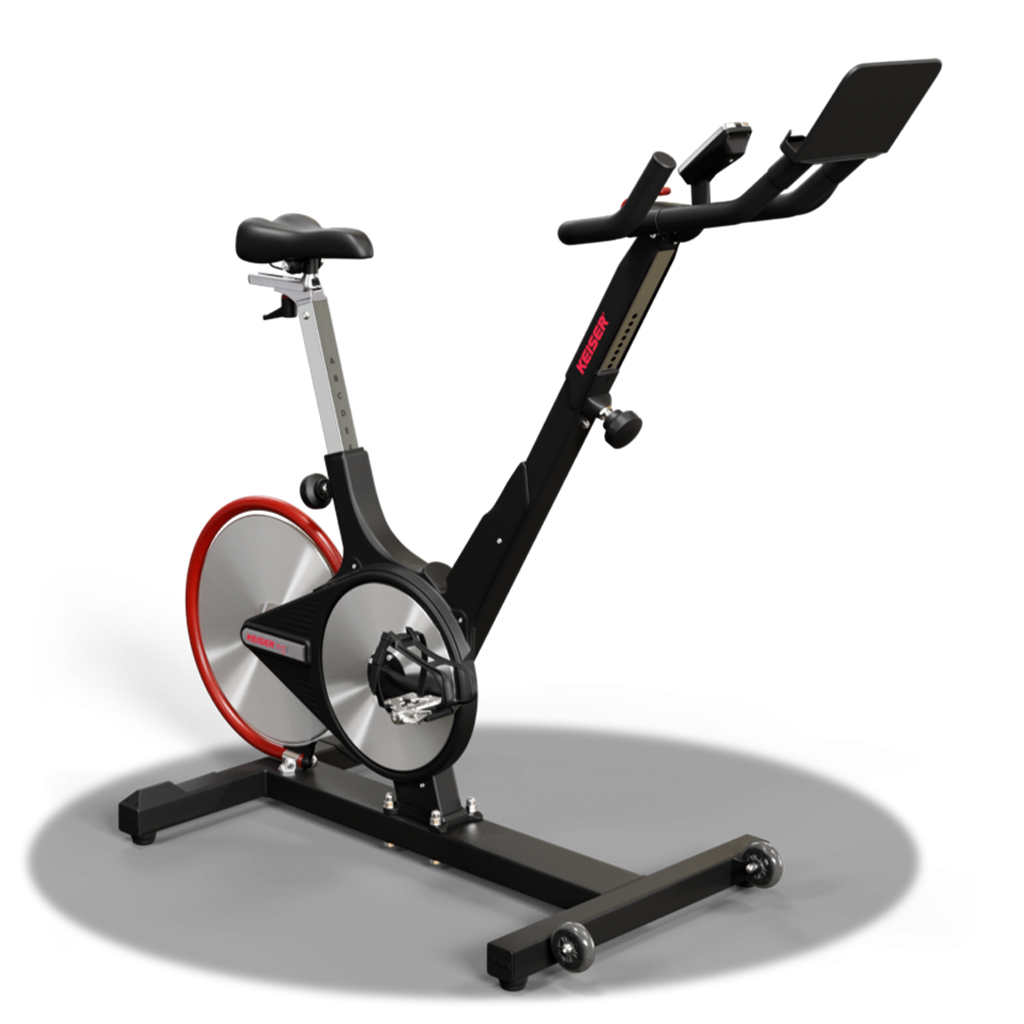
Your needs, this model
Does it fit your priorities?
How does the M3i Lite cockpit differ from the M3i?
Keiser's comparison identifies Model 5503's handlebars as two-way vertical-only, while the regular M3i (5507) offers four-way adjustment including fore/aft movement. Both list four-way seat adjustment. Check reach on the exact bike rather than assuming frame-family similarity means the same fit.
Explore this need in the finder →Which rider-height range should I use for the M3i Lite?
There is no single consistent published range in the reviewed Keiser sources: one Lite page passage gives 4 ft 10 in–7 ft, another gives 5–6 ft 2 in, and the comparison card uses 5–6 ft 2 in. Ask Keiser to resolve the conflict and test actual reach if fit is important.
Explore this need in the finder →Does the M3i Lite have a standard app connection?
Keiser specifies an M Connect display and general Bluetooth app-data capability, but the saved current compatibility table does not name Zwift for this Lite configuration. Do not treat generic Bluetooth as proof of a named app; verify the exact bike/display and app version before buying.
Explore this need in the finder →The M3i Lite is a current Keiser indoor cycle, Model 5503, and should not be treated as the standard M3i with a cosmetic trim change. The maker's comparison identifies an M Connect display and a 24-gear screen scale, but the handlebar post offers vertical rather than fore/aft adjustment. That change can be decisive if cockpit reach matters. Keiser's feature page also contains conflicting rider-height guidance, so the apparently similar M3i family frame is not a reason to assume that a fit chart for Model 5507 applies to Model 5503.
The Lite's specific adjustment tradeoff
Keiser lists a four-way adjustable seat and two-way vertical-only handlebar movement. The standard M3i 5507 and Studio Plus 5509 have four-way handlebars, including fore/aft positioning; the Studio 5508 is also vertical-only. On a bike built around a forward cycling posture, fore/aft hand position is a real part of the fit conversation. A tall handlebar can change height, but it cannot reproduce the same adjustment axis. Ask Keiser or the seller for a hands-on fit opportunity if you cannot tell from the spec sheet whether that reduced movement will work for your torso and preferred riding position.
Keiser lists 51 inches of depth, 26 inches of width, 44 inches of height and an assembled mass of 87 pounds. Those figures make the Lite lower and lighter on paper than the standard M3i, which the manufacturer lists at 49 inches high and 92 pounds. They are external body specifications, not required room clearances. Leave extra room for a rider to mount, dismount and move, and plan the delivery route, assembly space and floor protection. A compact frame does not remove those practical constraints.
Do not flatten the rider-height conflict
The sources do not agree on who the Lite fits. The product page's first V-frame bullet says 4 ft 10 in to 7 ft, while a later fit section says 5 ft to 6 ft 2 in; the current M Series comparison card also says 5 ft to 6 ft 2 in. Because those statements describe the same model, it would be misleading to repeat the widest range as a settled capability or to silently choose the narrower one. The reviewed evidence contains no exact-seat travel, inseam chart or written explanation reconciling the claims. If either endpoint matters to your purchase, ask Keiser for an answer tied to Model 5503 and verify the actual riding position.
Display and resistance have to be read carefully
Keiser describes magnetic resistance with infinitely incremental adjustment and labels the M Connect display scale as 24 gears. “24” is a console-reported gearing count, not a universal resistance-effort standard and not evidence of 24 physical clicks. It may help you repeat your own settings, but it does not make a gear number comparable with the level count on a different bike.
The Lite's product page says its M Connect display sends cadence, speed, power and heart-rate data to compatible fitness apps, and the display uses Bluetooth. The model page does not identify a particular app in the text we reviewed, and the saved Keiser compatibility sheet does not establish a named Zwift route for this specific Lite configuration. That is why this assessment does not count generic wireless connectivity as a match for a named-app requirement. Ask Keiser to confirm the exact display, bike revision and app version before relying on an integration. The feature page mentions a separate app-compatibility resource; it does not make every connected feature interchangeable across M Series bikes.
Shoes, power and buying checks
Keiser describes the M Series pedal family as usable with standard workout shoes held by toe-cage straps or SPD-cleated cycling shoes on the other side. Confirm the pedal and straps actually supplied with the Model 5503 offer. The M Connect display uses two AA batteries, while the pedals provide the rider's mechanical input. The website's direct home-shopping catalog did not expose a separate M3i Lite product listing or a retail SKU during this review; the active manufacturer model page identifies 5503, but a specific seller, package and current availability should be verified instead of inferred from the catalog card.
Before ordering, confirm the frame label says M3i Lite / Model 5503, request the right assembly instructions, inspect the fore/aft adjustment limitation, and get Keiser's written answer to the height-range conflict. Check the display, batteries, pedal interface, included tools and accessories, warranty, return terms and delivery access. Do not substitute an M3i 5507 manual or assume the two models share every adjustment merely because they carry the M3i name.
When it makes sense to keep it on the list
The Lite deserves comparison if you prefer a studio-style saddle bike, can make the vertical-only handlebars work, and value the M Connect display with a 24-gear readout. It is a weaker fit for someone who needs fore/aft reach adjustment or needs a definitive rider-height range before buying. The 5508 Studio is also vertical-only but uses a different 72-gear Studio Display; the 5509 Studio Plus adds fore/aft handlebar travel. Those are actual configuration differences, not ranking claims. This assessment is research-based: it does not report personal riding, comfort, noise or durability tests.
Key specifications
Key details at a glance
| Riding format | Indoor cycling / studio-style bike |
|---|---|
| Resistance mechanism | Magnetic, infinitely incrementally adjustable |
| Resistance levels | 24 |
| Maximum user weight | 350 lb |
| Console | M Connect display with a 24-gear scale and Bluetooth connection to supported apps/devices. |
| Listed length | 51 in |
| Listed width | 26 in |
| Listed height | 44 in |
| Assembled weight | 87 lb |
| Named connected apps | |
| Bluetooth app protocol | M connect display; keiser says it can send ride data to apps, but the saved display compatibility table does not establish a named zwift route for this edition. |
| Pedals | Keiser m series pedal; the standard model family is described with toe-cage straps and spd-cleat compatibility. confirm exact package pedal and cleat setup. |
Use the exact model’s instructions for operating limits, supplied equipment and version differences.
Sources for this review
Sources for this assessment

Put the details together
Use the finder to compare format, app support, resistance steps and the limits that matter in your room.