
Your needs, this model
Does it fit your priorities?
Does the Cross Training Bike need an All-Access Membership?
Peloton says All-Access is separate and required for full content and applicable hardware features; its product information also lists Just Ride without membership. Check current membership terms and whether the no-membership experience is enough for your intended routine.
Explore this need in the finder →What kind of cycling shoes fit the supplied pedals?
Peloton's product page specifies aluminum pedals that require cycling shoes with Delta-compatible cleats. It does not describe toe cages on this configuration; confirm the exact pedal package and whether you need to buy compatible shoes separately.
Explore this need in the finder →What room and rider limits should be checked?
Peloton lists a 54 x 23 x 61 in bike, a 297 lb maximum and a 4 ft 11 in–6 ft 5 in user-height range. It recommends 24 inches of clearance around the bike and an 8 ft ceiling. These are screening dimensions and published limits, not a personalized fit guarantee.
Explore this need in the finder →Peloton · current US Cross Training Series
The Peloton Cross Training Bike is the current base model in Peloton's home-bike lineup. It is a connected indoor cycle, not the older refurbished Original Bike and not the feature-rich Cross Training Bike+. This assessment is based on Peloton's current US product, lineup and setup pages. It is not a ride test: I have not used, measured or owned this machine.
A screen-centered cycle with manual control
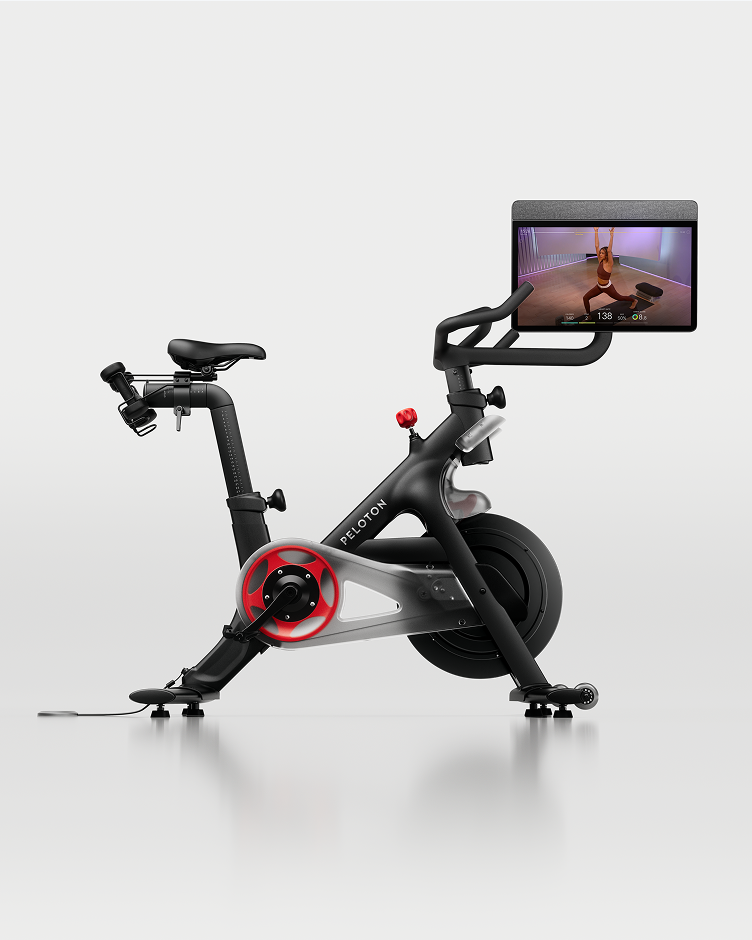
The clearest reason to consider this bike is its integrated 21.5-inch Full HD touchscreen, which rotates up to 360 degrees. Peloton presents that movement as a way to shift the screen toward off-bike workouts as well as cycling. That can make one display useful in a mixed training routine, but it does not create extra floor space: you still need room to dismount, turn the screen and safely move through a class. Peloton lists a 4-by-2-foot footprint and recommends 24 inches of clearance on all sides, plus a ceiling of at least eight feet. Measure the full room envelope rather than placing tape around just the frame.
Resistance is controlled manually with a knob. That is a straightforward choice for riders who want to make changes themselves, but Peloton does not list a numeric resistance-step count for this model or an automatic mode that follows instructor cues. A level number from another brand would not be a useful direct comparison anyway; there is no standard scale across bikes. If automatic changes are a must-have, compare the separate Cross Training Bike+ and confirm that the classes you use support its Target Metrics feature.
The product page lists a 297-pound maximum user weight and a 4-foot-11-inch to 6-foot-5-inch user-height range. These are manufacturer screening limits, not a personal fit result. The current listing describes an adjustable seat and handlebar but does not give their travel, a geometry diagram or a seat-height range. A rider near either published height boundary should verify reach and knee position on the exact machine rather than assuming an adjustment label guarantees comfort.
Subscriptions and the pedal interface matter
The bike is sold as a connected product, but hardware and content are separate parts of ownership. Peloton says the All-Access Membership is separate and required for its full class library and applicable hardware features. The product information also lists Just Ride without membership. That distinction is useful: a buyer who mainly wants the Peloton class ecosystem should check current subscription terms and household access, while someone who needs only a basic on-bike ride should confirm exactly what functions remain available without paying for content. I would not treat Bluetooth 5.2 as proof that Zwift, JRNY, FTMS or another outside training app will work; the current product page does not identify those capabilities.
One purchase check is easy to overlook: the aluminum pedals require cycling shoes with Delta-compatible cleats. The page does not describe toe cages for regular athletic shoes. If your household does not already own matching shoes, confirm whether a compatible pair is included in the exact offer or price a suitable pair separately. Peloton also lists weights as separate. The screen can support strength sessions, but those classes do not mean dumbbells arrive in the bike carton.
Peloton lists a USB-C port for device charging and Bluetooth 5.2 connectivity. It does not specify an FTMS route, resistance protocol, power-input requirement or third-party app list in the current product specifications. Those blanks matter when a user depends on a particular sensor, music setup or external training platform; seek a current, model-specific answer rather than filling it in from another Peloton generation.
How it compares with the Bike+
The Cross Training Bike+ is a distinct model, not just an alternate package. Peloton lists its screen at 23.8 inches rather than 21.5, its total bike weight at 144 pounds rather than 129, and its body at 54 by 22 by 60 inches rather than 54 by 23 by 61. Bike+ also adds a three-speed fan, phone tray, movement-tracking camera, Sonos-tuned sound with a rear woofer and an optional automatic-resistance mode on eligible classes. If those additions solve a real problem for your training, they provide a concrete reason to compare the Plus. If you will ride manually and do not want camera-based strength features, the base Bike retains the swivel display and screen-led class structure without those listed extras.
Both bikes retain the same maximum user weight, listed height range, shoe-cleat requirement and separate All-Access membership. The Bike+ is slightly narrower but heavier, so the listed body dimensions alone should not decide room fit or delivery. Its added weight may matter for moving and installation; confirm whether the seller provides expert assembly or self-assembly and read the exact Bike guide before committing. Peloton's setup page links the Bike and Bike+ guides separately.
Who should shortlist it—and who should pause
This model is worth comparing when an integrated, swiveling Peloton screen and a manually controlled studio-style ride are more important than open-ended app compatibility. Its published 297-pound limit, user-height range and body dimensions can help screen a space or shortlist, but they cannot establish comfort for an individual. It is a weaker fit if you require resistance to change automatically, want toe cages for ordinary sneakers, need a verified FTMS connection, or would rather avoid an ongoing content subscription.
Before ordering, verify the exact Cross Training Bike name, pedal/shoe arrangement, current membership terms, contents of the delivery package, return policy, warranty and assembly choice on the offer you are actually considering. The listing shows a 12-month limited warranty; confirm the current written terms and who provides delivery or service if the purchase is not direct from Peloton. This page makes no claim about current price or stock. It is a source-based assessment, not a personal endorsement from riding the product.
Key specifications
Key details at a glance
| Riding format | Indoor cycling / studio-style bike |
|---|---|
| Maximum user weight | 297 lb |
| Console | 21.5-inch Full HD touchscreen with up to 360-degree rotation; front-facing speakers |
| Display size | 21.5 in |
| Listed length | 54 in |
| Listed width | 23 in |
| Listed height | 61 in |
| Assembled weight | 129 lb |
| Named connected apps | Peloton All-Access content |
| Built-in USB charging port | Yes |
| Seat | Redesigned seat; seat adjustment is listed but travel is not quantified |
| Pedals | Aluminum clip-in pedals requiring cycling shoes with delta-compatible cleats; toe cages are not listed |
Use the exact model’s instructions for operating limits, supplied equipment and version differences.
Sources for this review
Sources for this assessment
- Peloton US exercise-bike lineup
- Peloton Cross Training Bike US product details and specifications
- Peloton Cross Training Series Bike assembly and safety guide links
- Peloton membership and Cross Training Series use without membership
- CPSC Original Peloton Bike PL01 seat-post recall notice
- Official Peloton Cross Training Bike product image

Put the details together
Use the finder to compare format, app support, resistance steps and the limits that matter in your room.