
Your needs, this model
Does it fit your priorities?
What is different about the 290's riding position?
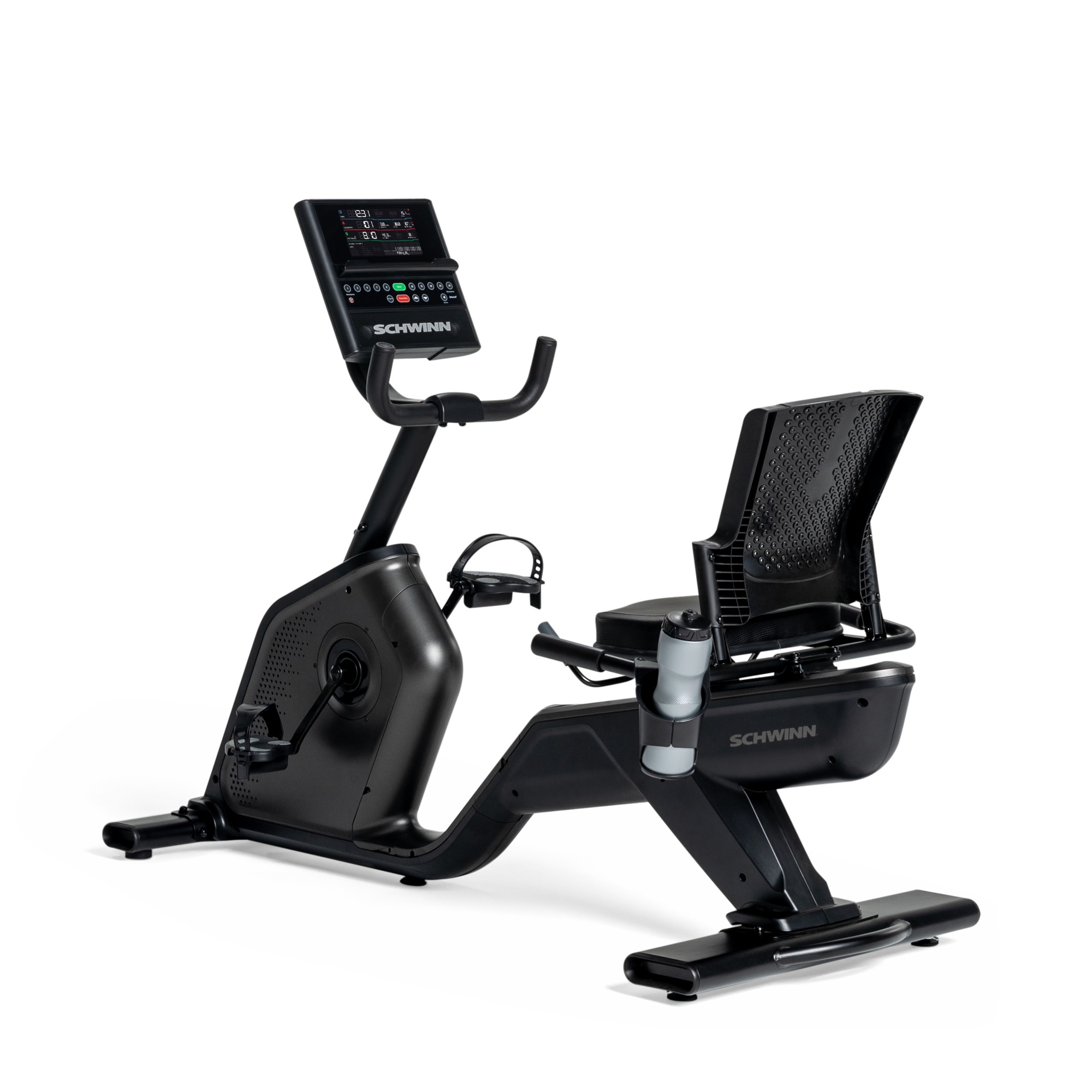
Schwinn describes a recumbent layout with an adjustable padded seat, a vented back with lumbar support and stationary handlebars positioned to make entry and exit easier. This describes the design, not a medical or comfort guarantee.
Explore this need in the finder →Can I use the 290 with a phone app?
The current page names JRNY and Zwift and identifies full FTMS Bluetooth connectivity. It says a separate digital subscription is required for connected apps; check the app's current device requirements before relying on a pairing feature.
Explore this need in the finder →Will the 290 fit in a short room?
Its listed body is 66.4 inches long, 28 inches wide and 47 inches tall. Add separate clearance for assembly, foot and seat access, and movement around the bike before deciding whether the room works.
Explore this need in the finder →A different riding position, not just another console
The Schwinn 290 Recumbent Bike changes the main decision from the upright 130 and 190: it puts the rider in a recumbent position with a padded, ventilated seat back. Schwinn describes an adjustable seat with a large vented back and lumbar support, plus stationary handlebars positioned to make entry and exit easier. Those design details may suit someone who prefers this style of seated setup, but they are not a medical claim or a guarantee of comfort. A rider still needs to check the actual step-in path, seat movement and pedal reach.
The current US listing identifies SKU HRB0121-OS and specifies a 330-pound maximum user weight. Its published dimensions are 66.4 inches long, 28 inches wide and 47 inches high, with an assembled weight of 107.6 pounds. This is a substantial machine to plan around: its length is notably greater than the 190's 47-inch listing, and its published weight deserves attention before choosing a room, delivery route or assembly plan. These are manufacturer figures, not measurements taken for this review.
Seat and access should be checked in person
A large ventilated back and adjustable padded seat are the clearest reasons to consider the 290 over the upright models. Schwinn describes the stationary handlebars as an entry-and-exit aid; the handlebars are not a moving upper-body workout feature. The product page does not provide a step-through height, a full seat-rail adjustment range or a rider-height fit chart. If easy access is central to your choice, confirm those points in the exact manual or by inspecting the bike before ordering. Do not infer a safe transfer or therapeutic benefit from the word “recumbent.”
The pedals are described as weighted and strapped. A media shelf, bottle holder and transport wheels are also listed. The product page names Bluetooth-enabled heart-rate tracking and says the heart-rate strap is not included. Match your own footwear and sensor to the actual pedal and Bluetooth requirements; none of those details should be guessed from the product photo alone.
Console, resistance and app route
Like the 190, the 290 lists 25 magnetic resistance levels, 13 workout programs and a 7-inch LCD. Schwinn also specifies a built-in USB charging port. These features make the console a documented on-bike workout route while leaving a phone or tablet available for another display. The number of resistance levels does not establish the actual range in watts, the feel of each step or a direct equivalence to another brand's levels. If you want a particular intensity range, seek a model-specific test or demonstration rather than treating a count as a performance measurement.
The current page lists JRNY and Zwift and says the bike supports full FTMS Bluetooth connectivity. Schwinn also states a separate digital subscription is required for connected apps. Full FTMS is a broader protocol claim than the 130's partial-FTMS description, but it still does not guarantee compatibility with every app, tablet, phone or sensor. Verify the app's current supported-device list if connected training is a deciding feature. The built-in workout programs are separate from the app subscription question.
Room fit and setup are part of the purchase
At 66.4 by 28 by 47 inches and 107.6 pounds assembled, the 290 calls for more room and a more deliberate handling plan than the compact dimensions of the 130. Its listed length does not reserve space for the rider's approach, seat adjustment, getting on and off, clear movement around the bike or a helper during assembly. Measure doorways and turns on the route to the chosen room, not just the final floor rectangle. A mat can help protect a floor, but it does not solve a clearance problem or establish whether the machine will fit through a doorway.
The manufacturer page specifies a power cord for a standard 110–120 V household circuit. The linked 290 manual index provides a 290 owner/assembly manual; the downloaded document identifies the 290 and includes assembly and operating sections. Follow that model's instructions for assembly, leveling, movement and maintenance. Do not substitute a 230 or 270 manual solely because the brand and recumbent format look similar.
Schwinn's page lists a 10-year frame warranty, two years for mechanical parts, one year for electronics and 90 days of labor. Confirm the warranty on the exact item and purchase channel, especially if it is not a new US retail unit. Also check that the seller is supplying SKU HRB0121-OS or an edition whose manual and included accessories you have verified.
Who should compare it?
The 290 deserves a shortlist place when a recumbent frame, supported backrest, easy-entry emphasis and 25-level magnetic console are priorities—and when the full length and weight work in the actual home. The 190 provides a more compact upright footprint with four-way adjustable handlebars; it is not an equivalent position. The 130 is shorter and lighter still, but has fewer resistance levels, a lower published maximum user weight and a more limited Bluetooth-protocol description.
Do not let the more supportive-looking seat decide the issue on its own. Check pedal reach, adjustment range, delivery path, assembly space, app requirements and the correct manual. This is a feature-based evaluation, not an in-person fit or comfort verdict. If the exact seat and access geometry are essential, arrange an inspection before relying on the page description.
Key specifications
Key details at a glance
| US retail SKU | HRB0121-OS |
|---|---|
| Riding format | Recumbent |
| Resistance mechanism | Magnetic |
| Resistance levels | 25 |
| Maximum user weight | 330 lb |
| Console | 7-inch LCD console |
| Display size | 7 in |
| Listed length | 66.4 in |
| Listed width | 28 in |
| Listed height | 47 in |
| Assembled weight | 107.6 lb |
| Named connected apps | JRNY / Zwift |
| Bluetooth app protocol | Full FTMS; connects to a wider variety of apps and Bluetooth devices |
| Built-in USB charging port | Yes |
| Seat | Adjustable padded, ventilated seat with backrest |
| Pedals | Weighted pedals with straps |
Use the exact model’s instructions for operating limits, supplied equipment and version differences.
Sources for this review
Sources for this assessment
Put the details together
Use the finder to compare format, app support, resistance steps and the limits that matter in your room.