
Your needs, this model
Does it fit your priorities?
Can the IC3 connect to Zwift or JRNY?
No training-app connection is listed for the IC3 in Schwinn's current product comparison. Its wireless heart-rate tracking is a separate feature and does not establish app pairing; a strap is not included.
Explore this need in the finder →What shoes can the IC3 pedals accommodate?
The current product page describes dual-sided pedals with SPD clips on one face and toe cages for athletic shoes on the other. Verify your cleat standard and the fit of the supplied cage before committing.
Explore this need in the finder →What rider fit and space range is published for IC3?
Schwinn recommends 5 ft 1 in to 6 ft 4 in or a 29-39 in inseam. The listed body is 54.6 x 30.7 x 49.8 in, and ceiling guidance is rider height plus 20 in. These are screening specifications, not a personal fit guarantee.
Explore this need in the finder →A simpler indoor cycle, not a connected-training package
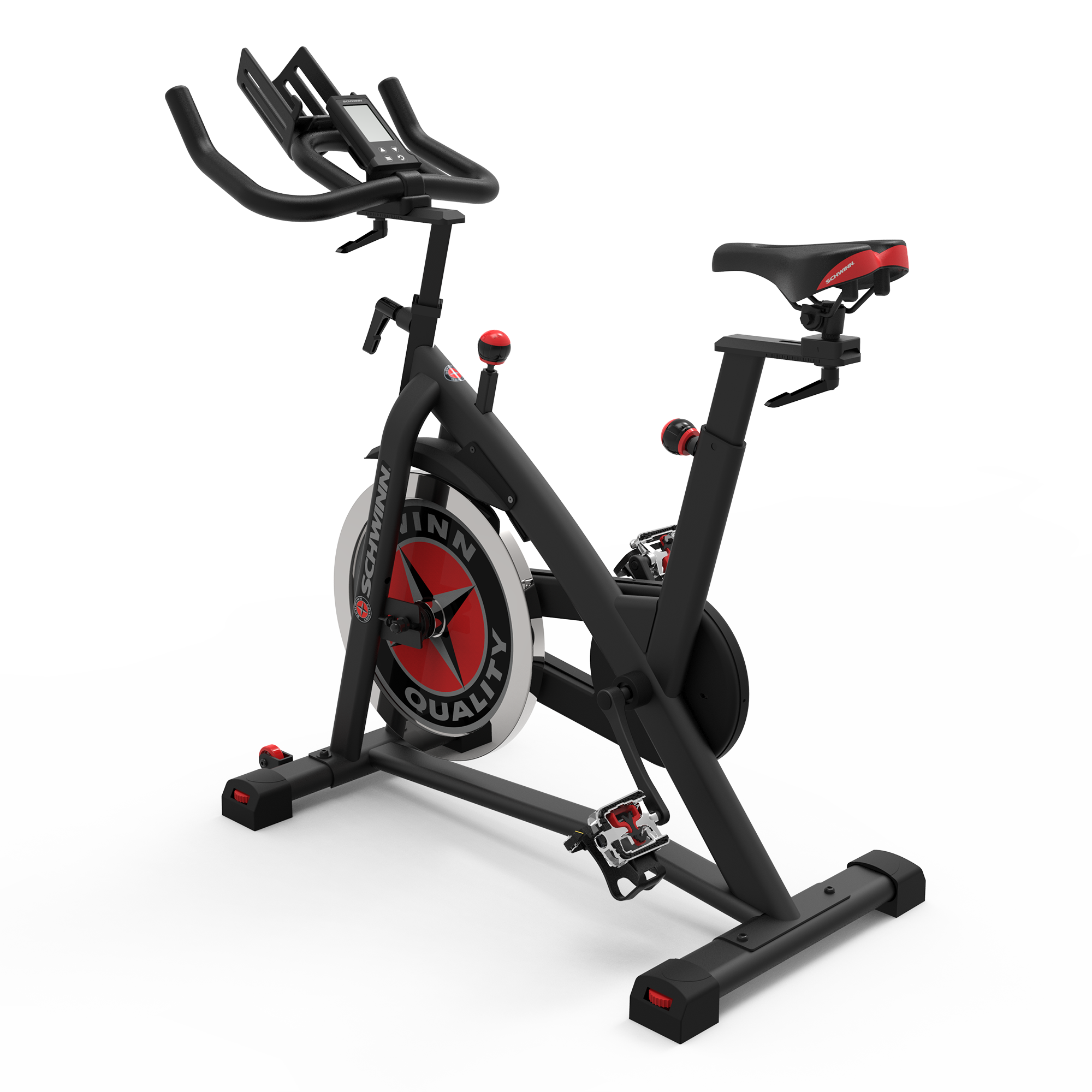
The current U.S. Schwinn store lists the IC3 Indoor Cycling Bike as SKU HFC0063-OS. It is a studio-style upright cycle with a 40-pound flywheel and infinitely variable resistance, rather than a step-count magnetic console like the company’s IC4. The distinction matters if the shopping plan is based on app connection, a numbered resistance range or familiar workout data: the IC3 has an LCD for ride metrics, but Schwinn’s product comparison says it does not connect to training apps and lists Bluetooth connectivity as “No.”
That app limitation is compatible with the separate claim of wireless heart-rate tracking. The IC3 product page describes Bluetooth-enabled heart-rate tracking but says the strap is not included; the comparison’s “no Bluetooth connectivity” refers to app connectivity, not a blanket absence of every wireless sensor feature. If a particular heart-rate strap or third-party app is important, confirm exactly what it can pair with before ordering. Do not buy the IC3 expecting Peloton, Zwift or JRNY data transfer based on the word Bluetooth alone.
Fit and pedal interface are the practical differentiators
Schwinn describes an adjustable race-style seat and handlebars that move in four directions. This provides more cockpit adjustment than the stationary access handles on a recumbent, but the published specifications do not give adjustment travel or a personalized fit guarantee. The current technical table recommends riders from 5 feet 1 inch to 6 feet 4 inches or an inseam of 29–39 inches; use this only as a screening range, then check your own knee extension, reach and posture against an assembled machine if possible.
The pedals are dual-sided: SPD cleats on one face and toe cages for athletic shoes on the other. That is a more consequential specification than a generic “cycling pedal” label. A rider with SPD shoes can use the clip-in side, while regular sneakers can use the cages; still check whether your existing cleat standard is SPD and whether the toe-cage size and strap are acceptable. A phone or tablet holder and one bottle holder are listed. Neither personal device nor the unbundled heart-rate strap should be assumed to come with the bike.
Resistance and console expectations
The manufacturer calls the IC3 resistance infinitely variable and lists the 40-pound flywheel; it does not publish a numbered resistance-level count or a watt range on the current page. Treat a turn of the resistance control as an adjustment, not as a standardized step comparable with another bike’s numbered settings. The LCD gives workout information, but this model is oriented toward direct riding rather than a connected class screen. Schwinn lists two AA batteries as the power source, so it does not need the wall adapter shown for the IC4.
The current product specs list a 300-pound maximum user weight, a 54.6 x 30.7 x 49.8-inch assembled footprint and 103 pounds assembled. Allow more floor space than the bike’s rectangle for mounting, emergency movement, a helper during setup and maintenance access. Schwinn’s minimum-ceiling rule is rider height plus 20 inches; the 49.8-inch product height is not a substitute for that rider-specific allowance.
How the IC4 differs
The IC4 costs more in the current catalog, but this review does not treat a temporary offer as stable value. Its functional gap is clearer: Schwinn lists 100 magnetic resistance levels, partial FTMS and a slate of named app integrations, plus a device holder, USB charging, a Bluetooth heart-rate armband and a pair of 3-pound dumbbells. Its published maximum is 330 pounds. The IC3 instead has an infinitely variable setting with no published step count, a lower 300-pound maximum, no app connection and a battery-powered LCD. Both use a race-style seat, four-way handlebar adjustment and dual-sided SPD/toe-cage pedals. The IC4 is not automatically a better fit; the more connected feature set comes with a heavier listed machine and separate app subscription requirements.
One evidence caveat applies to both current indoor cycles: the IC3 product page links a parts/manual record titled “IC3 (700ICi),” dated 2018. It is useful family evidence, but not an exact statement that every instruction or part applies to current SKU HFC0063-OS. Obtain serial-specific instructions if buying an older used machine or sourcing service parts. Schwinn lists a five-year frame, two-year mechanical-parts and electronics, and one-year labor warranty for current home use; verify the terms for the seller and purchase date.
The IC3 suits a comparison shortlist when the goal is a straightforward indoor cycle, a mechanical-feel resistance control, a visible LCD and dual-sided pedals without relying on a named training app. It is a mismatch for a shopper who requires app pairing, at least 330 pounds of published capacity or a specific numbered resistance scale. This is a manufacturer-source-based assessment, not an in-person ride, durability test or rider-fit trial.
Key specifications
Key details at a glance
| US retail SKU | HFC0063-OS |
|---|---|
| Riding format | Indoor cycling / studio-style bike |
| Resistance mechanism | Infinitely variable; mechanism not specified on current product page |
| Maximum user weight | 300 lb |
| Console | LCD console for workout metrics |
| Listed length | 54.6 in |
| Listed width | 30.7 in |
| Listed height | 49.8 in |
| Assembled weight | 103 lb |
| Named connected apps | |
| Bluetooth app protocol | No training-app Bluetooth connection |
| Seat | Adjustable race-style seat; range not published |
| Pedals | Dual-sided spd clips and toe cages for athletic shoes |
Use the exact model’s instructions for operating limits, supplied equipment and version differences.
Sources for this review
Sources for this assessment
Put the details together
Use the finder to compare format, app support, resistance steps and the limits that matter in your room.